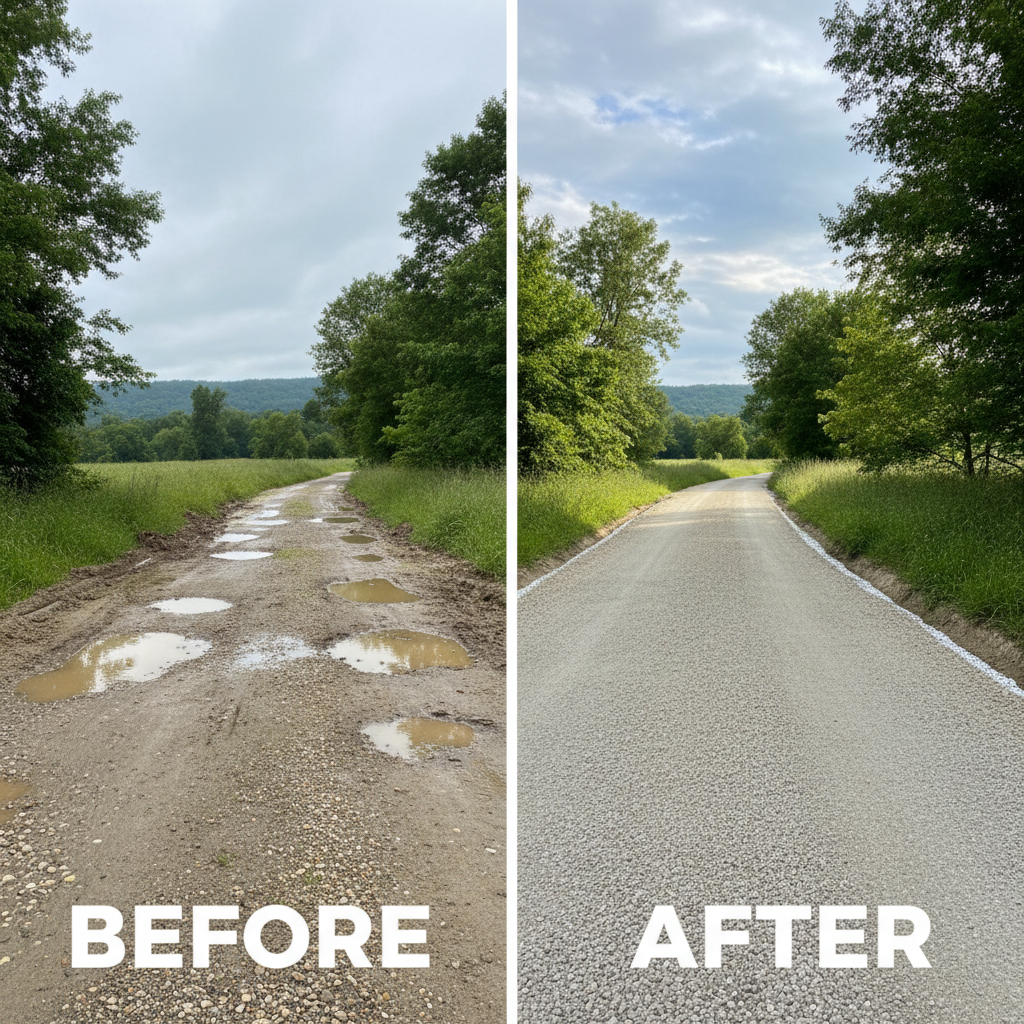
Potholes form when water saturates the driveway base due to poor drainage, requiring a systematic gravel driveway pothole repair NZ approach to ensure a long lasting surface. To fix them for good, property owners must break up compacted potholes mix the aggregate and fill the cavity by grading. Then shape and restore a proper crown so that water flows away from the center.
Navigating a rutted, uneven driveway is a frustrating daily ritual for many New Zealand property owners. While it is tempting to simply pour new gravel into a growing hole, this approach rarely addresses the root cause of the failure. In our local climate, the cycle of heavy rain and vehicle weight quickly turns these quick fixes back into muddy craters. To achieve a durable result, you must look beneath the surface. This article details the structural science behind pothole formation and why mechanical grading outperforms manual repairs. We will explain how professional techniques, including the use of tungsten tipped tines and the creation of a proper drainage crown, transform a failing driveway into a resilient surface. You will discover the practical steps required to eliminate potholes for good and maintain your rural or commercial accessway effectively.
The Science of the Pothole: Why Your Gravel Driveway Keeps Failing
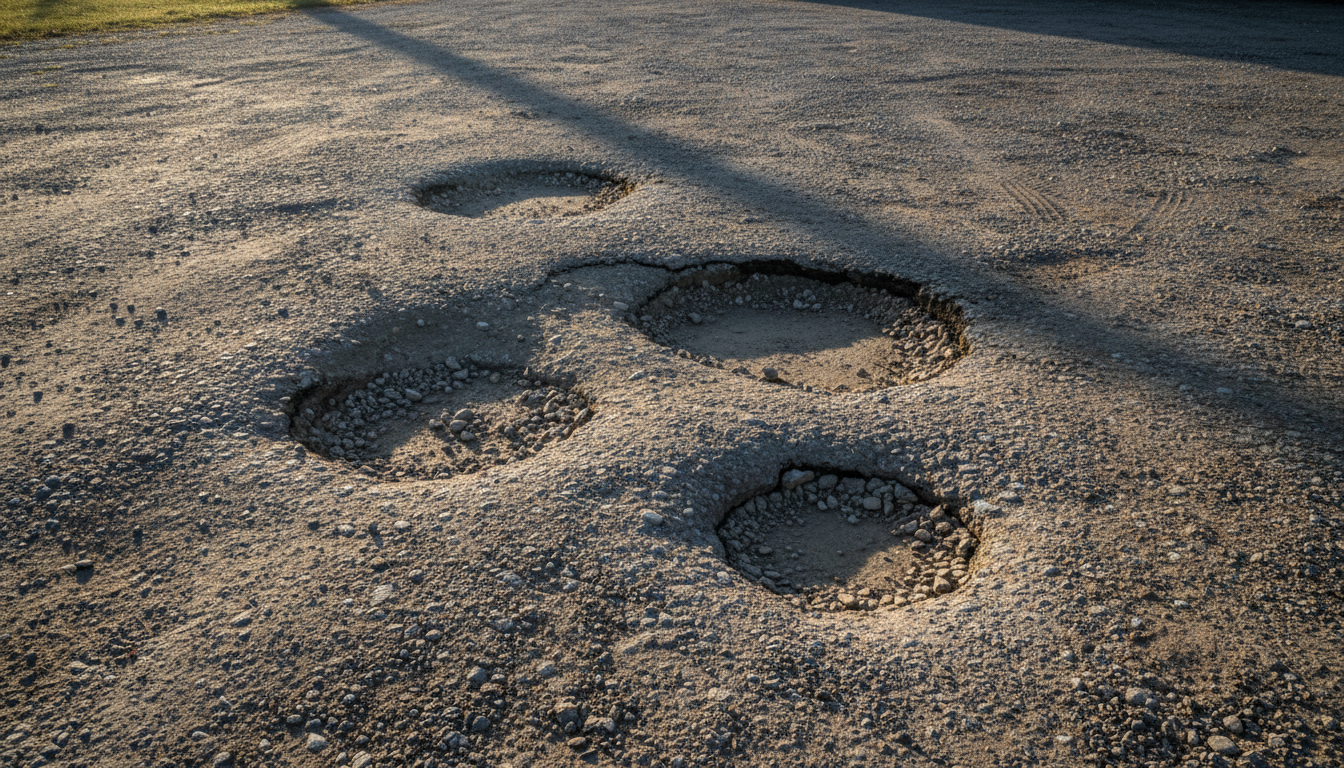
Every property owner in the Lower North Island knows the frustration of a pothole that refuses to stay fixed. You fill it with fresh aggregate, pack it down with a shovel, and within three weeks of heavy rain coming off the Tararua ranges, the hole is back. This cycle happens because of the underlying science of how a road surface fails. In regions like Levin and the Kapiti Coast, the combination of high annual rainfall and heavy traffic creates the perfect environment for structural breakdown.
Three main factors drive this failure: water pooling, traffic stress, and poor base compaction. When water sits on a flat or recessed surface, it permeates the subgrade, turning the hard base into a soft slurry. Traffic then hydraulically forces this mud upward through the gravel. Over time, the constant pressure of tires creates what we call pothole memory.
Pothole memory is the reason why standard DIY gravel driveway pothole repair NZ often fails. When a pothole forms, it creates a hard, compacted bowl of fine materials at its base. This bowl acts as an underground basin, trapping water even after you have filled the top with new gravel. Because the new stone is sitting in a saturated, slick environment, it cannot bond with the existing driveway. Instead, it simply floats on top; as soon as a vehicle passes over it, the loose stones are shoved aside, exposing the same old hole beneath.
For farmers and those managing a commercial yard grading project, understanding this subsurface dynamic is essential. Without breaking that compacted bowl and addressing the poor drainage that allowed water to pool in the first place, you are merely treating the symptom rather than the cause. Achieving a long-term fix requires professional gravel driveway grading services that can physically reset the driveway's structure and eliminate the memory of previous failures.
The Mistake of Topping Up: Why New Gravel Isn't a Permanent Fix
It is common for lifestyle block owners or site managers to order a few cubic meters of GAP20 or AP40 when a driveway starts showing its age. The logic seems sound; if there is a hole, fill it with more rock. However, simply spreading a thin veneer of new aggregate over an existing surface creates a layer cake effect. The original driveway surface has usually formed a hard, glazed crust over years of traffic and weather. Without mechanical intervention, the new gravel sits on top of this impenetrable layer like marbles on a polished floor.
Because there is no bond between the old base and the new material, the top layer remains loose. When a vehicle brakes, turns, or accelerates, the tires easily displace the unattached stones, pushing them into the roadside grass or back into the original depressions. This is why you often see fresh gravel scattered everywhere except where it is needed most.
From a budget perspective, this cycle of topping up is a significant financial drain. For those managing commercial yard grading projects, the cost of repeatedly purchasing and spreading aggregate that disappears within a few months quickly exceeds the price of a proper mechanical repair. You are paying for material that provides no structural value. Achieving a permanent gravel driveway pothole repair NZ requires a move away from the shovel and trailer approach. True durability only comes when the new material is physically integrated into the existing base, a process that requires specific equipment to break the surface tension and reset the driveway's foundation.
Mechanical Grading: The Professional Secret to Long Lasting Repairs
True durability in gravel driveway pothole repair NZ relies on a process known as ripping and remixing. Instead of simply adding more material to the top, professional grading involves mechanically breaking the existing hard crust of the driveway. This crust, formed by years of traffic and weather, prevents any new aggregate from bonding with the old base. By ripping into this layer, we physically destroy the bowl that defines a pothole's memory, ensuring that the structural failure at the bottom of the hole is completely removed.
Once the surface is broken, the equipment remixes the existing material. This step is critical because it blends the larger stones with the fines, the smaller dust and sand particles that act as a natural glue. If you have a driveway where the stones are loose and shifting, it is usually because the fines have washed away or settled at the bottom. The ripping process brings these binders back to the surface and integrates any newly added stone into a single, homogenous mixture.
This mechanical blending creates a consistent material depth across the entire surface. It eliminates the weak spots where water used to gather and ensures there are no hidden soft patches. For large scale commercial yard grading, this consistency is what allows the surface to support heavy machinery without rutting. By resetting the driveway's structure in this way, we create a workable mat of material that is ready to be precisely reshaped for drainage.
The Pothole Pros Advantage: Tungsten Tipped Tines and Custom Engineering
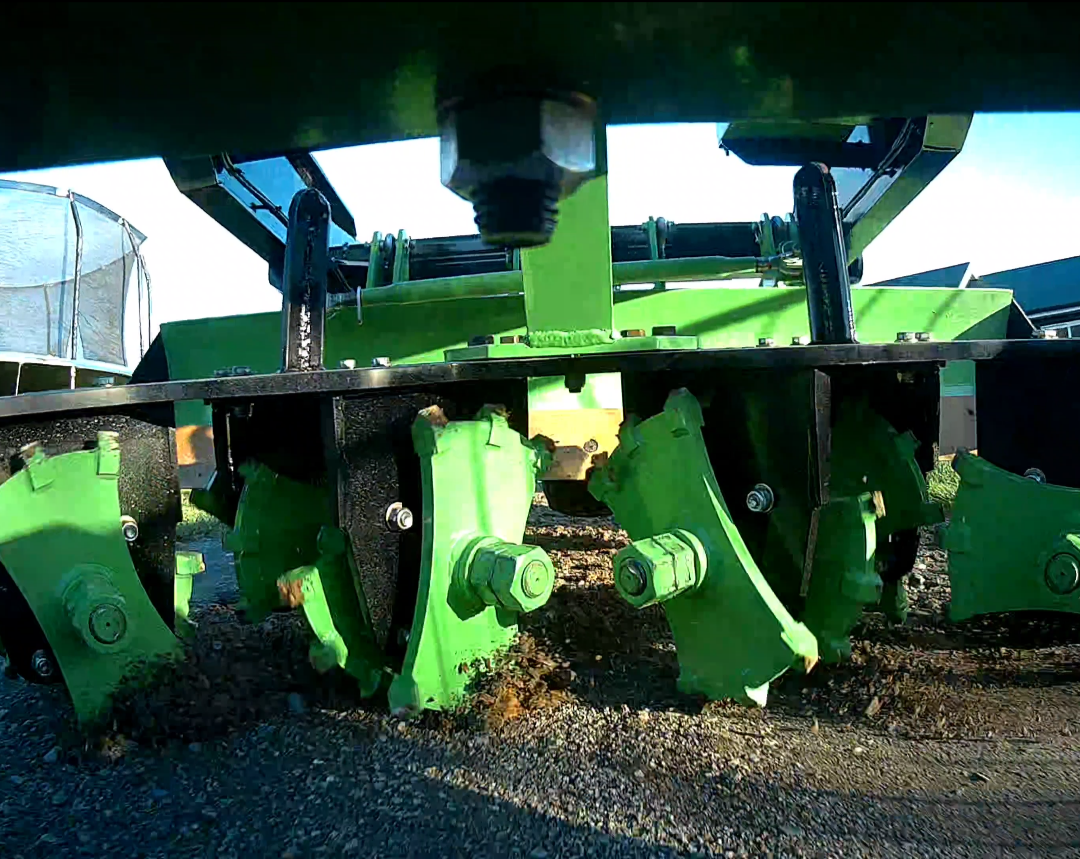
To achieve a high-quality gravel driveway pothole repair NZ, the equipment must be capable of penetrating the most stubborn surfaces. Many local contractors rely on standard blade graders or domestic tractors equipped with a simple levelling bar. While these tools can smooth out loose surface material, they often lack the downforce and durability to break through the glazed crust of a driveway that has been compacted by years of heavy use.
At Pothole Pros, we utilize a custom-built grading trailer designed specifically for the unique demands of New Zealand roading aggregates. The heart of this machine is a series of tungsten-tipped tines. Tungsten is one of the hardest materials available, which is essential when dealing with the dense, river-worn stones often found in the Manawatu and Horowhenua regions. Unlike steel blades that might skid over a hard surface, these tines bite deep into the base.
This specialized engineering allows us to engage the surface and remix the aggregate from the inside out. By reaching beneath the top layer, the trailer brings up the buried fines and blends them with the larger stones to create a stable, interlocking matrix. This level of mechanical precision is what separates our commercial yard grading and gravel driveway grading services from temporary surface fixes. We are not just scraping the top; we are re-engineering the profile for long-term stability.
The Importance of the Crown: Proper Drainage for NZ Weather
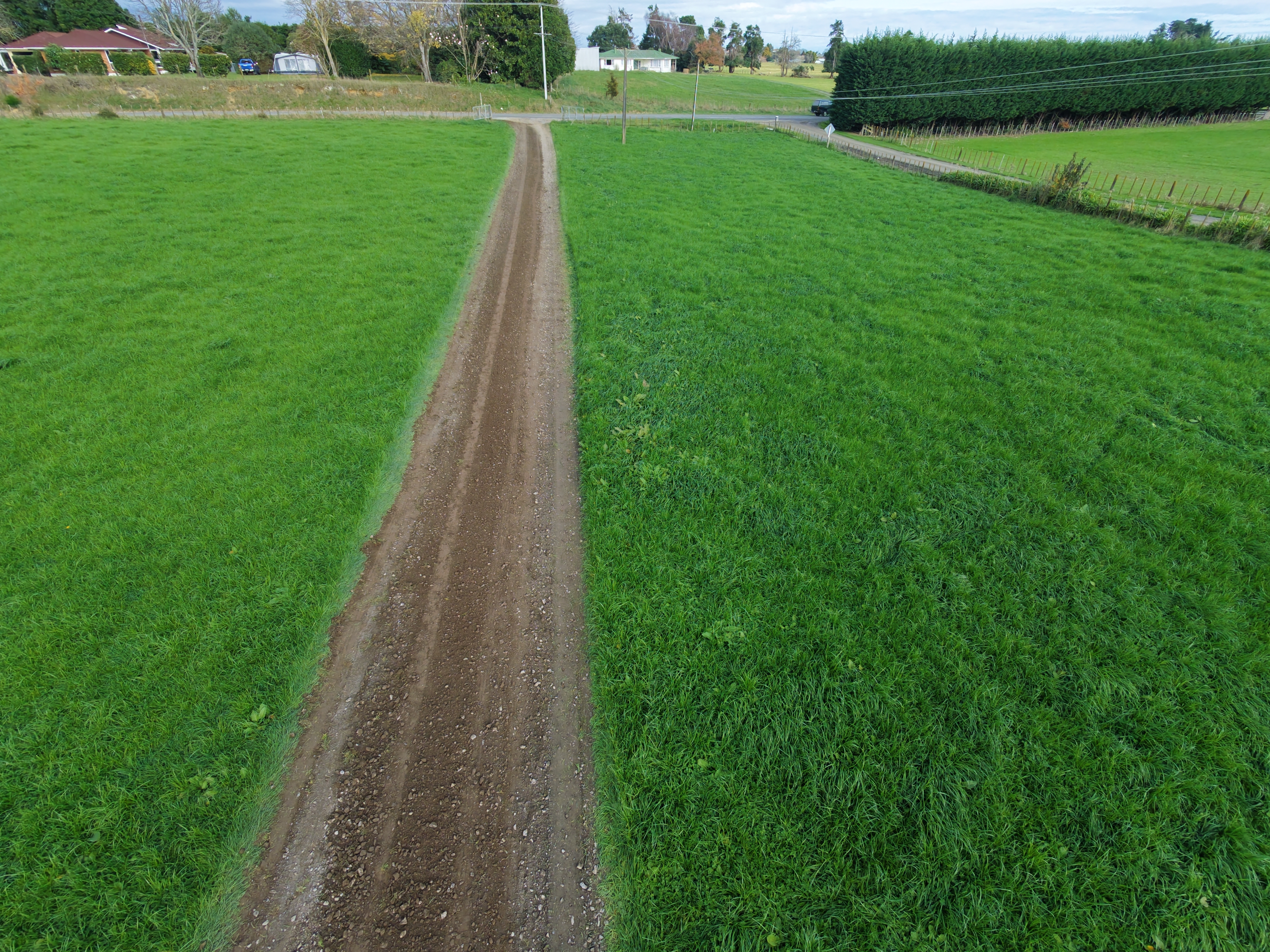
Re-engineering that profile begins with the "crown," the slight parabolic curve across the driveway's cross-section. Its primary function is to shed water to the sides and into swales or drains before it can penetrate the base. In the Lower North Island, where high rainfall and heavy coastal squalls are frequent, any flat spot becomes a "bird bath" that will eventually fail. If water is allowed to sit on the surface, a pothole is inevitable, no matter how high the quality of your aggregate.
Professional gravel driveway grading services focus on establishing a consistent cross-fall, typically between three and four percent, from the center to the edges. Our custom-built grading trailer is specifically engineered to reshape this profile with mathematical precision. Unlike a basic blade that might leave an uneven or wavy finish, the trailer ensures a smooth, uniform slope that forces runoff away from the traffic lanes. By correctly setting the crown, we solve the drainage issues that plague properties from the Tararua ranges to the coast. This structural correction is a fundamental component of effective gravel driveway pothole repair NZ, ensuring that the work stands up to the next winter storm.
Compaction: Locking the Surface in Place
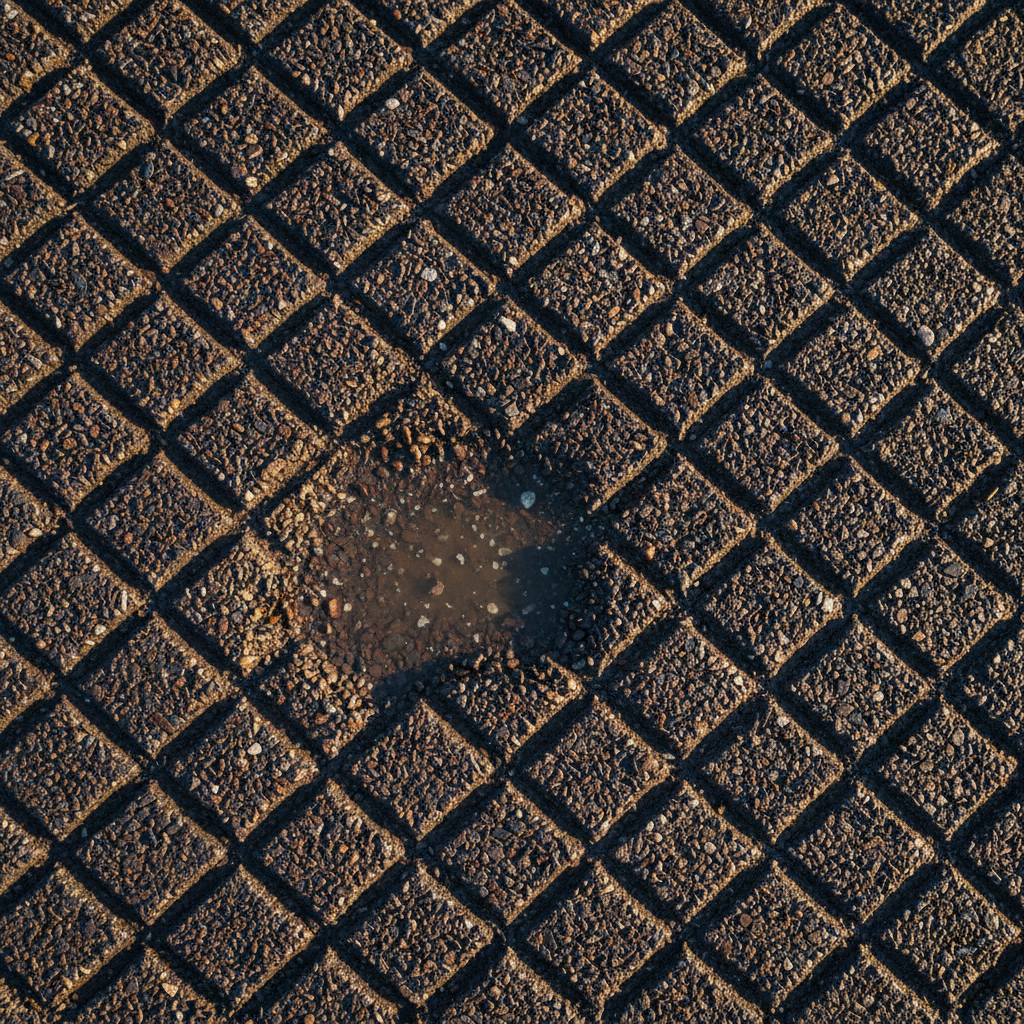
Once the crown is shaped, the final essential step for any successful gravel driveway pothole repair NZ is professional compaction. Relying on the traffic of daily commuters or farm machinery to pack the material down is a mistake that leads to early failure. Vehicle tires apply localized, uneven pressure that often displaces loose aggregate and creates ruts before the surface has a chance to stabilize.
In contrast, a heavy roller applies consistent weight across the entire width of the surface. The vibration is critical; it encourages smaller fines to migrate into the voids between larger stones, creating a tightly interlocked matrix. For managers of commercial yard grading projects, this high density compaction is what allows the yard to support heavy axle loads without shifting.
A hallmark of professional gravel driveway grading services in the Manawatu is the distinct diamond or chevron pattern left on the surface by the roller drum. These marks are a visual indicator that the material has been compressed under significant pressure, forming a durable, weather resistant crust. This mechanical seal ensures the driveway holds its shape and sheds water effectively, even during the intense rainfall common across the Horowhenua.
Maintaining Your Commercial Yard or Lifestyle Driveway
Preventative care is the most cost effective way to protect your investment once a professional gravel driveway pothole repair NZ is complete. For farmers and site managers across the Manawatu-Whanganui region, the key is identifying surface failure before it reaches the subgrade. Small depressions, often called bird baths, are the first sign that your driveway’s crown is flattening. If you notice water standing still after a typical Levin rain shower, the surface is no longer shedding runoff, and a pothole is already in development.
Lifestyle property owners should aim for gravel driveway grading services every two to three years to refresh the surface crust. However, high-traffic commercial yard grading projects often require an annual cycle, especially if heavy machinery or livestock transporters are frequenting the site. Watch for washboarding or loose aggregate accumulating on the edges of the track. Addressing these minor shifts early prevents the pothole memory from re-establishing itself, keeping your access routes safe and your repair budget manageable over the long term.